
One of the most common questions I hear from parents is this:
“How do I know if my child is ready for piano lessons?”
It’s such a thoughtful question. And I love that parents are asking it.
As a piano teacher in the San Francisco Bay Area — and as a mom who has taught my own children piano for over 20 years — I understand the hesitation. You don’t want to push too soon. You don’t want to waste money. You don’t want tears at the piano bench.
You want it to feel right.
This past year, I taught seven new piano students, and I also work as a K–6 tutor in math and reading. That means I spend my days watching how children learn — how they focus, how they process, how they respond to gentle challenge.
So let me give you an honest, experienced answer.
Readiness Is Less About Age — and More About Development
Parents often ask for a specific number:
“Is five too young?”
“Should we wait until eight?”
Here’s the truth: age is a guideline, not a rule.
I’ve seen very mature five-year-olds thrive at the piano — and I’ve seen eight-year-olds struggle because they weren’t developmentally ready to focus or practice consistently.
When I assess readiness, I look for three core things:
1. Can your child focus for short periods of time?
They don’t need a 45-minute attention span. Not even close.
But can they:
- Sit and complete a short activity?
- Follow 2–3 step directions?
- Try again when something feels tricky?
Piano lessons require small bursts of focus. If your child is constantly jumping from activity to activity with no ability to re-engage, we may start more gently — or wait a bit.
2. Can they recognize patterns?
Music is built on patterns.
As a math and reading tutor, I can tell you: children who are developing pattern recognition in numbers and letters often transition beautifully into music.
If your child:
- Notices repeating shapes
- Enjoys puzzles
- Likes rhythm games
- Claps along to songs naturally
That’s a wonderful sign.
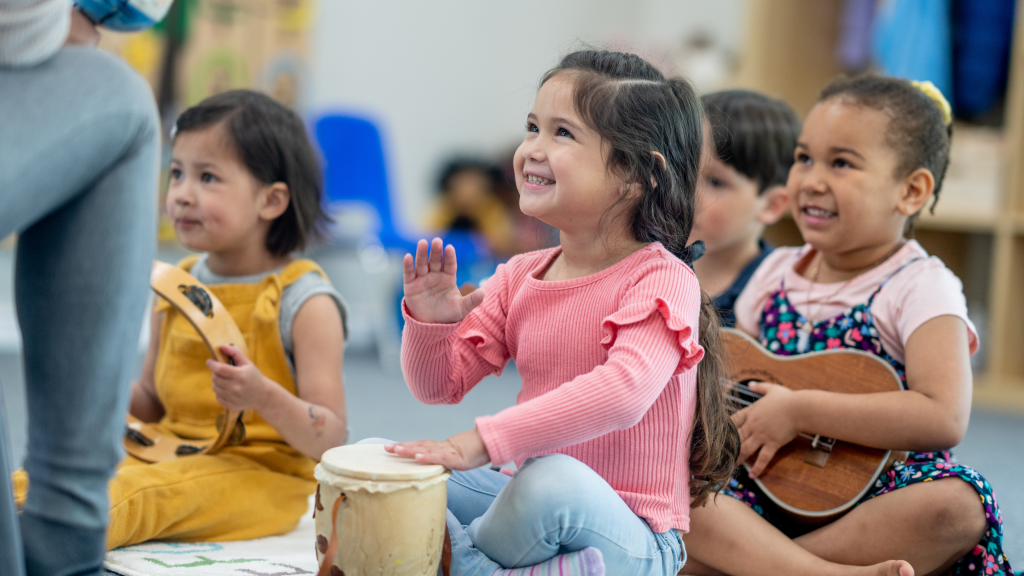
3. Are they curious about sound?
This one is underrated.
Some children are naturally drawn to making sound — tapping rhythms, singing, experimenting at a keyboard. Others are less interested.
Curiosity is a strong indicator of readiness. Skill can be built. Curiosity is the spark.
Emotional Readiness Matters Just As Much
As a mother, I deeply understand the emotional side of this decision.
Some children are sensitive, some are shy, and some are easily discouraged.
That doesn’t mean they aren’t ready — it means they need the right teacher and approach.
When I introduce young children to piano, I do so gently. I don’t overwhelm them with theory or pressure. We explore. We listen. We build confidence before complexity.
If your child is sensitive, that’s not a disadvantage. In fact, many sensitive children become beautifully expressive musicians.
They just need patience.
What “Not Quite Ready” Might Look Like
Sometimes parents appreciate hearing the other side too.
Your child may not be ready if:
- They refuse all structured activities
- They become extremely frustrated by small mistakes
- They resist sitting for even five minutes
- They have no interest in music at all
And that’s okay.
Waiting six months to a year can make a huge difference in maturity. There’s no prize for starting earliest.
The goal is long-term love of music — not rushing to check a box.
A Gentle Introduction Makes All the Difference
One of the reasons I began teaching outside my own home after 20 years of teaching my children was because I saw how much the tone of introduction matters.
Many children quit piano not because they dislike music — but because their first experience felt:
- Too rigid
- Too pressured
- Too fast
- Too comparison-driven
In my studio, especially with beginners, we focus on:
- Listening skills
- Rhythm through movement
- Small wins
- Clear structure without pressure
I want children to leave lessons feeling successful — even if that success is as simple as identifying two white keys correctly.
Confidence builds consistency. Consistency builds skill.
The Practice Question Parents Always Ask
Another readiness indicator? Your willingness as a parent.
Let’s be honest.
Young children cannot manage practice independently. Especially under age eight.
If your child is five, six, or seven, they will need:
- Gentle reminders
- A set routine
- Encouragement
- A calm presence during practice
You don’t need to know how to play piano. But you do need to support the routine.
As a parent myself, I understand how busy Bay Area schedules are — work, commutes, sports, tutoring, everything. That’s why I guide families toward realistic practice expectations.
For beginners, that might look like:
- 5–10 minutes a day
- Consistent time of day
- Clear, small goals
Piano doesn’t have to dominate your household. It simply needs a rhythm.
The Academic Connection (Without Overhyping It)
As someone who tutors K–6 math and reading, I see firsthand how music supports academic development.
Piano strengthens:
- Left-to-right tracking (essential for reading)
- Fraction understanding (rhythm is math!)
- Fine motor coordination
- Memory
- Sequential thinking
But I want to be clear: I don’t teach piano as an academic booster.
I teach piano as an art.
The cognitive benefits are a gift — not the sole purpose.
Music gives children something deeper: discipline with beauty.
What I’ve Learned From Teaching 7 Students This Year
Every child is different.
One student this year came in confident but impatient.
Another was shy but intensely focused.
One struggled with rhythm but excelled in reading music quickly.
Watching these children grow has reinforced what I’ve known for decades:
There is no “perfect piano student.”
There are simply children with unique learning styles.
That’s why individualized instruction matters. Group classes can be wonderful — but one-on-one lessons allow me to adapt pacing, tone, and goals.
Some children need structure.
Some need warmth.
Some need challenge.
Some need space.
Good teaching is responsive.
If You’re Unsure, Start With a Trial
Sometimes the best way to assess readiness is simply to try.
A gentle introductory lesson can reveal:
- Whether your child feels excited
- Whether they respond to instruction
- Whether they’re comfortable at the piano bench
There’s no long-term commitment required to explore.
And if we decide together that waiting would be beneficial, I’ll tell you honestly.
My goal is not to enroll as many students as possible. My goal is to help children begin music at the right time, in the right way.
A Final Word to Bay Area Parents
I know parenting in the Bay Area can feel competitive.
It can feel like everyone’s child is:
- Coding at seven
- In three sports
- Taking two languages
- Practicing violin at a conservatory level
Take a breath.
Piano lessons should not be another pressure point.
They should be a place of creativity, focus, and steady growth.
If your child is ready — developmentally, emotionally, and with family support — piano can become a lifelong companion.
And if they’re not ready yet?
That’s wisdom, not failure.
If you’re in the San Francisco Bay Area and considering private piano lessons for your child, I’d be happy to talk through your questions. Every child is different, and sometimes a conversation is the best first step.
Music is a long journey.
Starting it gently makes all the difference. 🎹